

TL; DR
- Most deals fail due to poor data room management, not a single major issue.
- Common mistakes include disorganized folders, excessive permissions, poor version control, off-platform Q&A, ignored analytics, and weak security.
- M&A failure rates remain high (70 to 90%), with over 40% of deals affected by inadequate due diligence.
- Due diligence now takes about 64% longer than a decade ago, increasing costs and delaying deals.
- Strong processes, including organized indexing, least-privilege access, version control, centralized Q&A, analytics monitoring, and robust security, help keep deals on track.
The Room Is the First Impression
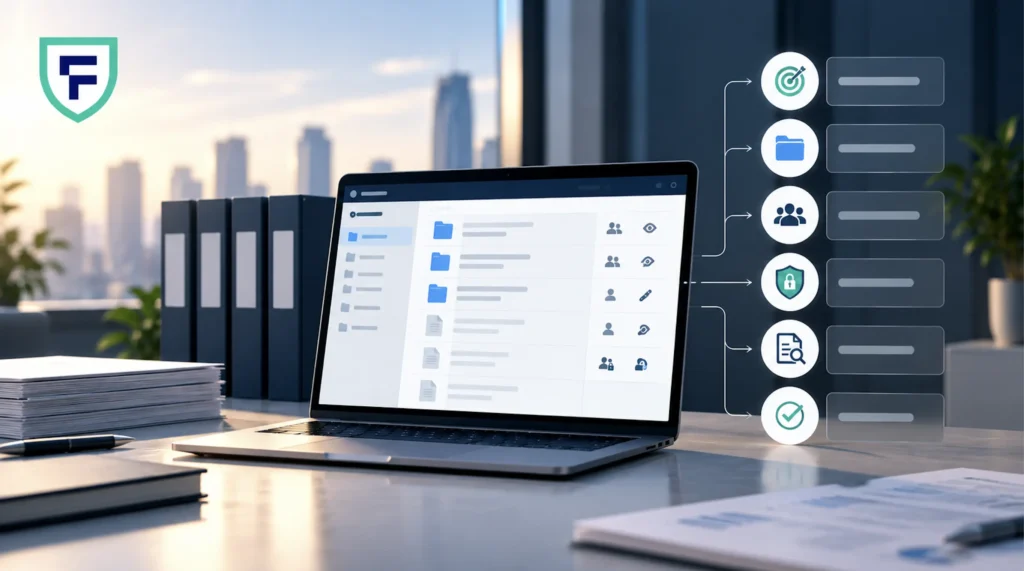
Long before a buyer reads your financials, they form an opinion of your company based on how your data room is organized. A clean, logical, well-controlled room signals a disciplined operator. A chaotic one signals risk, and risk gets priced in.
This matters because the odds are already stacked against most deals. Decades of research summarized by the CFA Institute and Knowledge at Wharton place the M&A failure rate at roughly 70 to 90%, with inadequate due diligence consistently among the top causes. McKinsey has found that more than 40% of deals suffer from inadequate due diligence, and its analysis warns that diligence in most deals can overlook as much as half of the potential merger value.
Timelines are stretching in parallel. The M&A Research Center at Bayes Business School analyzed more than 900 global transactions and found due diligence now takes 64% longer than a decade ago, with average processing time rising from 124 days to 203 days, measured from when the data room opens to the public announcement. The data room is not a passive filing cabinet. It is the arena where a deal is won, delayed, or quietly lost.
Here are six data room mistakes we see most often, why they happen, what they cost, and how to fix them.
Mistake 1: Disorganized or Departmental Indexing
The mistake. In a deal, the sellers build their virtual data room the way their company is wired internally, with folders named after departments or whoever owns the file. Finance dumps its folder, legal dumps another, and nobody maps it to how a buyer actually reviews a business.
Why it happens. Deal preparation usually starts as an internal scramble under deadline pressure, and people upload what they have around their own mental model because it feels efficient in the moment.
The consequence. Buyers review by workstream, not by your org chart. A structured M&A due diligence process helps deal teams organize information around the areas buyers and their advisors actually need to evaluate.
When an analyst cannot find 3 years of audited statements without opening twenty files, confidence drops and questions multiply. Disorganization reads as operational immaturity and lengthens a timeline that Bayes’s research shows is already growing. Buyers translate friction into perceived risk, and perceived risk shows up as deeper scrutiny, larger holdbacks, or a lower offer.
The fix. Use a standard M&A index organized by function, not department. The structure should also reflect the type of M&A deal structure and the specific diligence requirements associated with the transaction.
The convention investment bankers and private equity teams expect groups to have top-level folders such as Corporate, Financial, Legal, Tax, HR, Intellectual Property, Commercial, and Operations, with consistent sub-numbering underneath. Add a short note at the top of each folder describing its contents, and assign a document owner per functional area so accuracy has a name attached. A reviewer should locate any requested item in under thirty seconds without asking where it lives.
Mistake 2: Flat Permissions and Over-Sharing
The mistake. Every user gets the same access. No tiering, no watermarking, no limits on printing or downloading, and often no gating of the most sensitive material until the right stage.
Why it happens. Flat permissions are simple to administer, and when several bidders are moving at once, uniform access feels like less work.
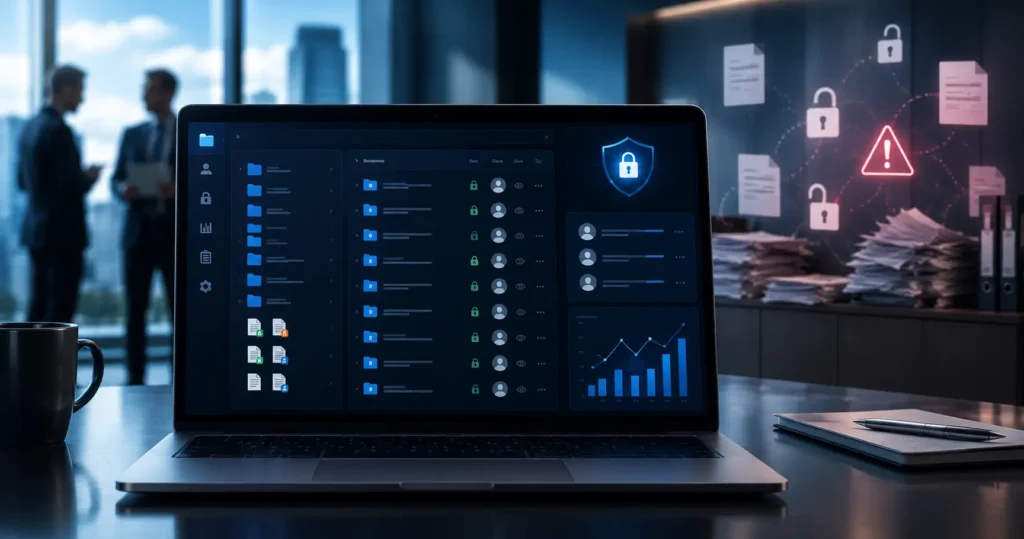
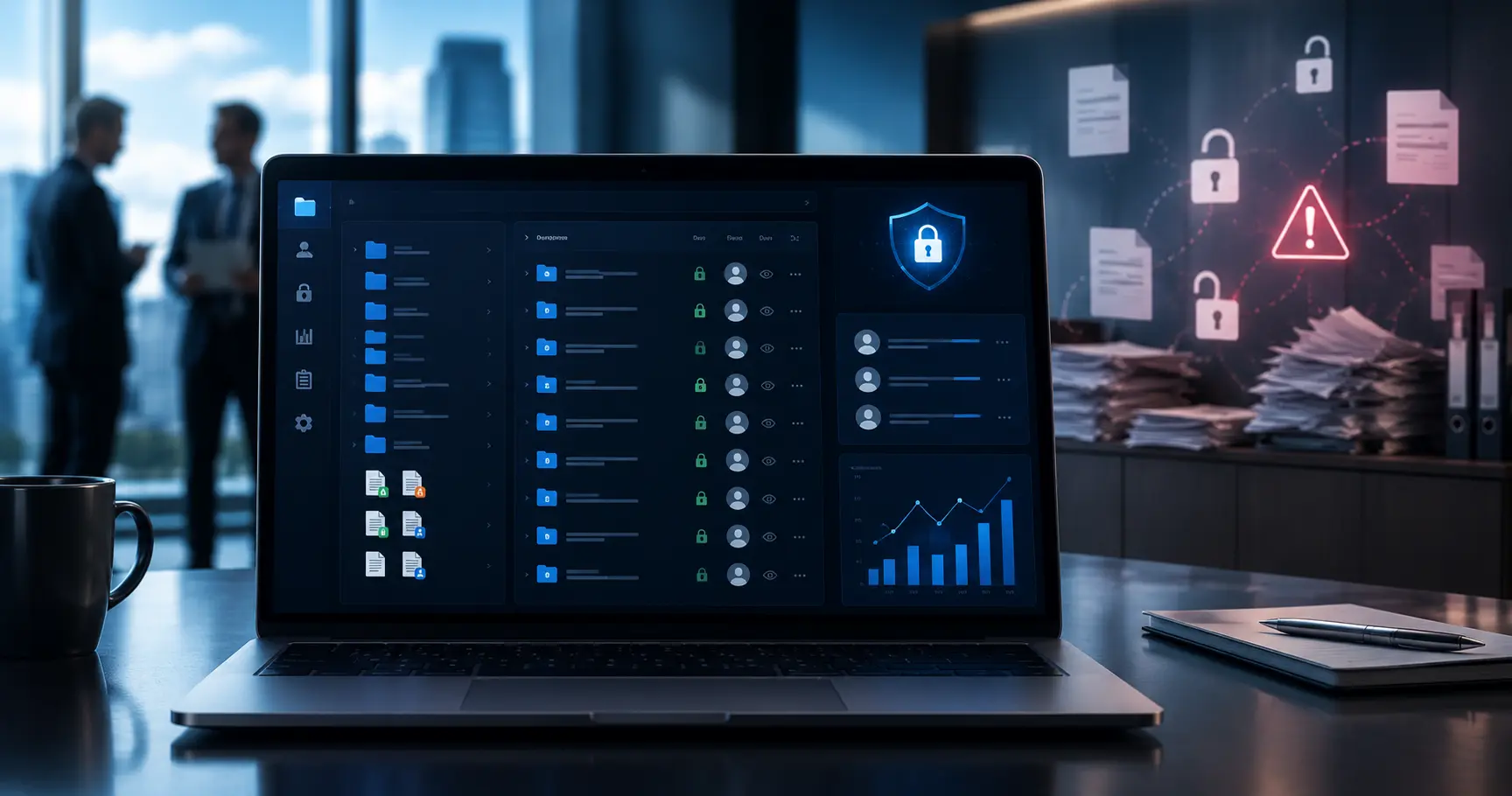
The consequence. This is where a data room stops being a housekeeping problem and becomes an existential one. Virtual data room security is fundamentally different from simply sharing files through a conventional enterprise file-sharing platform.
Over-sharing exposes cap tables, customer lists, pricing, and employee data to parties who may be competitors circling under cover of the process. Confidentiality failures are common and costly. H/Advisors Abernathy’s fifth annual leaks study found that 31% of announced transactions valued at one billion dollars or more leaked before official announcement in 2024, a figure that jumped to 64% for deals above ten billion. Poor access hygiene can import liability that outlasts the deal itself.
In the Marriott case, the UK Information Commissioner’s Office ultimately fined the company £18.4 million after a breach originating in acquired Starwood systems went undetected for years; its original 2019 notice, which proposed a £99 million penalty, stated that Marriott failed to carry out sufficient due diligence when it bought Starwood and should have done more to secure its systems.
The fix. Apply the principle of least privilege. When evaluating platforms, buyers should also compare virtual data room providers in India based on permissions, security controls, hosting, audit trails and compliance capabilities.
Give each user only the access their role and stage require. Gate the crown jewels, such as detailed customer contracts, source code, and compensation data, until late-stage diligence after a signed letter of intent. Turn on dynamic watermarking, restrict printing and downloading on sensitive files, and use view-only or fence-view modes for the most confidential documents. In competitive auctions, isolate bidder groups so they cannot infer each other’s activity from what they can see.
Mistake 3: Chaotic Version Control
The mistake. Files pile up with names like “Model_v2,” “Model_final,” and “Model_final_FINAL,” sitting beside superseded copies nobody has removed.
Why it happens. Deals are living processes. Financials get refreshed, contracts get redlined, and this is one reason M&A software has become increasingly important for managing documents, workflows and transaction data.
The consequence. Outdated or contradictory documents undermine credibility faster than a missing document does. When a buyer’s advisor finds two versions of the same contract with no clear indication of which one governs, they stop trusting the room and start treating every number as suspect. That skepticism translates into deeper diligence, more questions, and pricing protection through larger escrows or holdbacks, right at the point where a quality-of-earnings dispute can move the valuation conversation against you.
The fix. Set naming conventions before the room opens. A reliable pattern is date, category, description, and version, for example 2025-06_Financials_AuditedStatements_v3. Replace outdated files instead of stacking new ones beside them, and lean on the platform’s built-in version history so the audit trail stays intact without cluttering the active view. One authoritative source per document, always.
Mistake 4: Bypassing Structured Q&A
The mistake. Sensitive questions get answered over email, WhatsApp, or a quick phone call instead of through the data room’s Q&A workflow.
Why it happens. Email feels faster and more personal, and senior people default to whatever channel they already use, especially under time pressure.
The consequence. Off-platform answers create information asymmetry, where one bidder learns something material that others do not, which can taint a competitive process. They also destroy the audit trail. In a mid-market deal, buyers can submit hundreds of questions, and without a centralized system, items fall through the cracks, answers become inconsistent, and the timeline suffers. If a dispute arises later about what was disclosed and when, scattered inboxes are a weak defense, both in negotiation and in any post-close argument over representations.
The fix. Route every question through the data room’s structured Q&A module. This is just one example of how modern M&A software categories are helping deal teams centralize transaction workflows and reduce manual coordination.
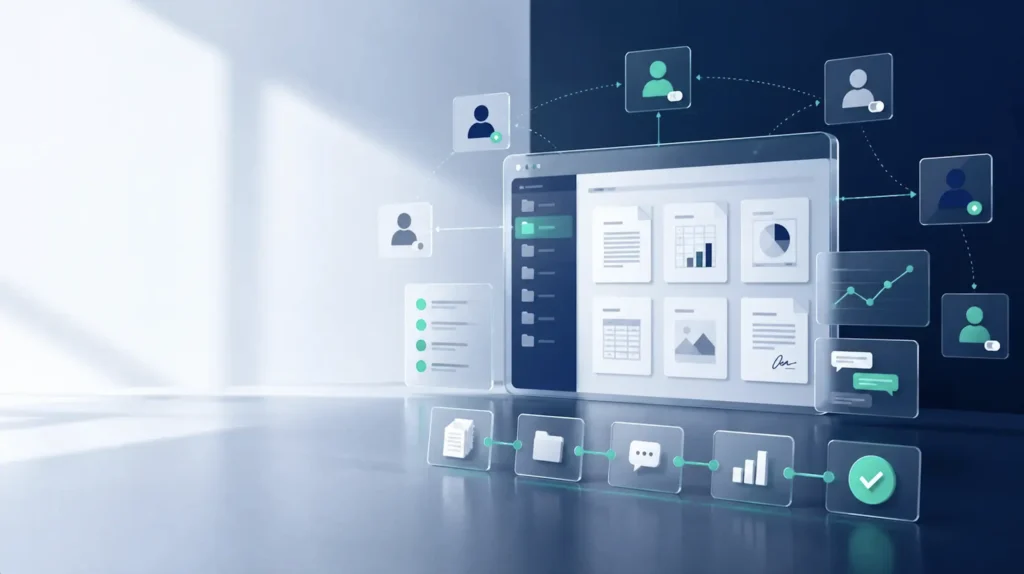
Assign clear roles for submitters, coordinators, and subject-matter experts, and categorize questions by workstream so the right person answers with context. The result is a searchable, time-stamped, defensible record of exactly what was asked, who answered, and when, which doubles as intelligence about where buyer attention concentrates.
Mistake 5: Ignoring Room Analytics
The mistake. The team sets up the room, invites users, and never looks at the activity data again.
Why it happens. Once diligence is live, deal teams get heads-down on responses and negotiation, and the analytics dashboard becomes a nice-to-have rather than a live intelligence feed.
The consequence. You lose one of the few informational edges a seller has. Every view, download, and repeat visit is a signal. A buyer who keeps returning to a specific litigation file or a customer contract is telling you where their concern sits and where they may push on price later. Ignore the heatmap, and you walk into negotiation without having seen the objection coming. Audit trails also surface unusual behavior and underpin the legal defensibility of the whole process.
The fix. Assigning a deal leads to reviewing analytics daily. Watch which documents draw the most attention, which users are genuinely engaged, and where activity clusters, then feed those insights into Q&A preparation and negotiation strategy. A buyer’s behavior in the room is close to reading their mind, and it sits in a dashboard most sellers never open.
Mistake 6: Skipping the Security and Certification Check
The mistake. Teams pick a data room based on price or familiarity without confirming which security standards it meets, or understanding what “secure” needs to mean for their specific deal.
Why it happens. Security certifications feel like a procurement checkbox rather than a live risk. Deal teams assume any vendor calling itself a “virtual data room” has already solved this.
The consequence. Buyers and their counsel increasingly expect a data room to run on infrastructure aligned with recognized frameworks such as ISO 27001 and SOC 2, with encryption in transit and at rest, multi-factor authentication, and complete audit logging. The National Institute of Standards and Technology’s Cybersecurity Framework treats access control, data protection, and continuous monitoring as baseline expectations rather than extras, and a data room that cannot demonstrate them invites a security review that stalls the whole process. For companies handling Indian personal data, this extends to the Digital Personal Data Protection Act. As the American Bar Association has noted, the framework carries extraterritorial reach and gives the government authority over cross-border data transfers, with sector regulators layering on their own localization rules. A room hosted outside that framework can introduce friction that a locally hosted, compliant platform simply avoids. For transactions involving Indian businesses or regulated data, an India-hosted virtual data room can also simplify data residency and regulatory considerations.
The fix. Before choosing or activating a data room, confirm its certifications in writing, ask how encryption and access logging actually work, and match hosting location to the regulatory reality of your buyers and your own jurisdiction. If an IPO or public listing is on the horizon, the same discipline doubles as audit readiness, since underwriters and regulators need every disclosure traceable back to source support.
Conclusion: Treat the Room as Deal Infrastructure, Not Storage
None of these six mistakes is exotic, which is exactly why they are dangerous. They accumulate quietly, and by the time a buyer’s confidence has cooled or a competitor has caught wind of the process, the damage is priced in and hard to reverse. A disciplined data room does the opposite. It compresses timelines, protects confidentiality, preserves negotiating leverage, and signals that you run a tight operation worth paying a premium for.
FirmsData was built for deal teams who treat the room as infrastructure rather than a filing cabinet, with local hosting, granular least-privilege permissions, watermarking and print controls, clean version management, a structured Q&A module, and a real-time analytics dashboard. If you are preparing for an M&A process, a fundraise, or IPO readiness, the fastest way to see the difference is to walk through it with your own documents. Schedule a demo and see how a well-organized room changes the way buyers experience your deal.