

The speed, security, and coordination demands of modern M&A transactions have outgrown email threads, shared drives, and spreadsheet trackers. Technology is no longer a back-office convenience in deal-making. It is a competitive advantage that determines which firms close faster, protect information better, and manage complexity more effectively.
This guide explains what M&A software does, the features that matter most, and how different tool categories work together across the deal lifecycle.
What M&A Software Does
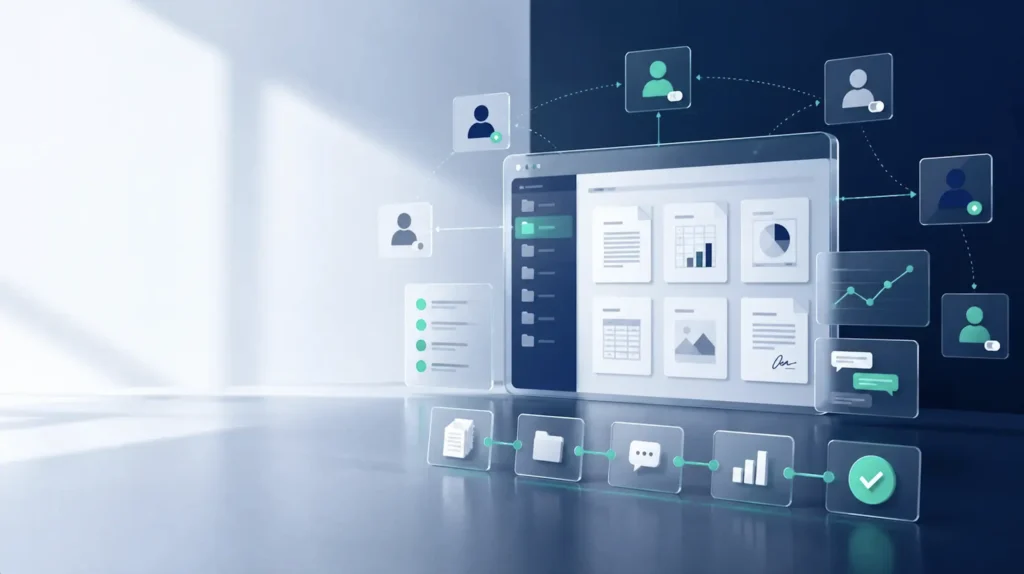
At its core, M&A software is a centralized digital platform that allows acquirers, targets, advisors, and legal teams to organize, track, and collaborate on transactions from sourcing through post-merger integration. The technology replaces fragmented workflows with structured, auditable processes.
The core use cases span the entire deal lifecycle:
- Deal sourcing and pipeline management: Identifying, evaluating, and tracking potential targets or buyers
- Due diligence management: Organizing, securing, and reviewing thousands of documents across financial, legal, operational, and tax workstreams
- Transaction execution: Managing task assignments, milestone tracking, and stakeholder communication during active deals
- Compliance and audit: Maintaining detailed activity logs and supporting regulatory requirements
- Post-merger integration: Tracking integration milestones, synergy realization, and cultural alignment
Features That Differentiate Effective M&A Platforms
Security Architecture
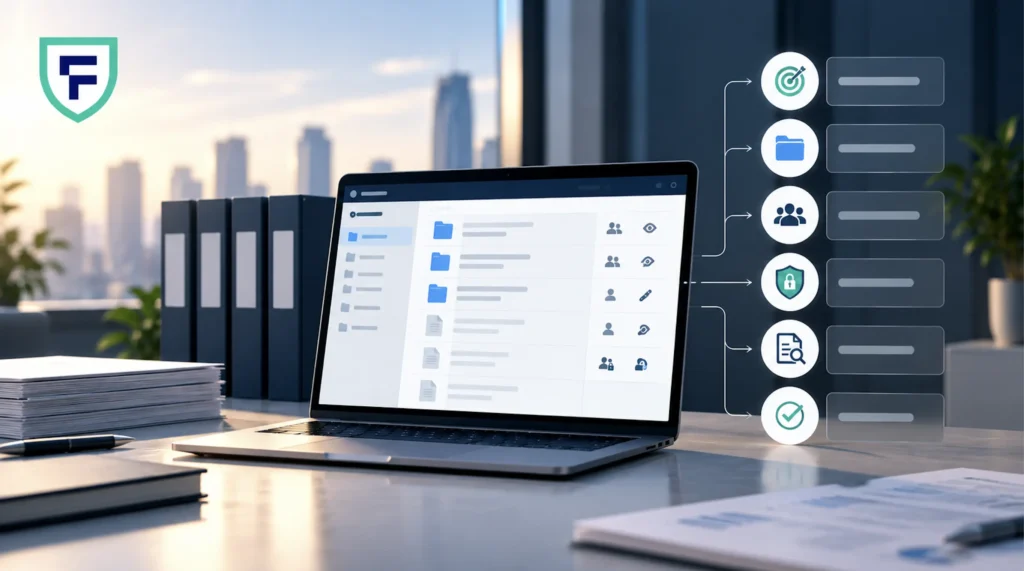
Confidentiality is the foundation of every M&A transaction. A leak of deal terms, financial projections, or strategic plans can destroy value, trigger regulatory scrutiny, or kill a deal entirely. Effective M&A platforms provide AES-256 encryption at rest and in transit, granular permission controls (per-document, per-user, per-action), dynamic watermarking for traceability, multi-factor authentication, IP and domain restrictions, and compliance with SOC 2, ISO 27001, and GDPR.
Virtual Data Room Functionality
The VDR is the backbone of due diligence. A strong VDR offers strict permission-based access to individual documents and folders, detailed audit trails logging every interaction, integrated Q&A with assignment and tracking, bulk upload with folder structure preservation, advanced search (including full-text and OCR for scanned documents), and version control with change tracking.
The user experience matters as much as the feature set. External parties, investors, sellers, auditors, and legal counsel, need to navigate the platform without training. If they cannot, the data room becomes a bottleneck instead of an accelerator.
Task and Workflow Management
Deals involve dozens of parallel workstreams with interdependencies. Effective M&A software provides automated checklists tied to due diligence categories, milestone tracking with deadline alerts, task assignment with accountability, approval workflows for document review and signoff, and progress dashboards that give leadership real-time visibility.
AI and Automation
AI capabilities in M&A software have matured significantly. The most useful applications include automated document classification and tagging, contract analysis with clause extraction, anomaly detection in financial data, predictive analytics for deal outcomes, and natural language search across large document sets. These tools do not replace human judgment. They amplify it by processing volumes of information that no team could review manually in the time available.
Analytics and Reporting
Data room analytics reveal how stakeholders are engaging with deal documents. Which sections are receiving the most attention? Which investors have stopped reviewing? Where are bottlenecks forming in the Q&A process? These insights inform deal strategy, help prioritize follow-up, and provide early warning when engagement patterns change.
How Different Tools Work Together
No single platform handles every M&A function. The most effective tech stacks combine specialized tools around a central hub:
- Virtual data room (central hub): Secure document management, collaboration, and audit. Platforms like FirmsData serve this function with built-in deal management and unlimited storage.
- Financial data platforms: Bloomberg, Capital IQ, and Refinitiv Eikon provide the market data, comparable transactions, and financial metrics that feed valuation models.
- Due diligence automation: AI tools like Kira Systems extract information from contracts and documents, reducing review time.
- CRM and deal flow: Intapp DealCloud and MadeMarket track relationships, pipeline, and deal status across the firm.
- Collaboration tools: Microsoft Teams and Slack manage real-time communication. Excel (cloud version) handles collaborative financial modeling.
Choosing the Right Platform
The right M&A software depends on your deal volume, team size, security requirements, and budget. When evaluating platforms, consider:
For SMB and mid-market firms: Prioritize platforms that combine VDR and deal management in one place, offer transparent pricing without per-page fees, and provide support that understands deal workflows. Integration with existing tools (Excel, email, calendar) reduces adoption friction.
For enterprise firms: Evaluate platforms that integrate with existing infrastructure (Bloomberg, Capital IQ, DealCloud), offer API connectivity, and provide dedicated account management. Deployment speed and scalability matter when running multiple concurrent transactions.
For all firms: Security certifications (SOC 2, ISO 27001), user experience for external parties, and the quality of customer support should be non-negotiable evaluation criteria.
The firms that invest in the right M&A technology stack handle more deals with fewer resources, close faster with fewer errors, and protect sensitive information more effectively. In a competitive advisory market, that combination translates directly to mandate wins and client retention.