

India’s Digital Personal Data Protection Act (DPDPA) has changed the compliance landscape for every organization that processes personal data within the country. The law imposes specific obligations around consent management, breach notification, data localization, and data subject rights, all backed by substantial penalties for non-compliance.
For companies that use virtual data rooms to manage M&A transactions, investor communications, or legal filings, compliance is not a separate project. It needs to be embedded in the platform itself. If your VDR stores personal data on servers outside India or lacks automated consent-tracking and breach-notification workflows, you have a compliance gap that needs attention.
This article walks through the key DPDPA requirements and explains what a compliant VDR architecture looks like in practice.
Key Requirements Under the DPDPA
Consent Management
Organizations must obtain explicit, informed, and revocable consent before processing personal data. The consent mechanism must record a clear opt-in action, and data subjects must be able to withdraw consent at any time. This means your VDR needs a system that captures consent at the point of data collection, logs it immutably, and supports withdrawal requests without breaking your workflow.
In practice, this affects any VDR process that involves uploading or sharing documents containing personal information, including employee records shared during M&A due diligence, KYC documents for investor verification, and customer data provided as part of operational audits.
Breach Notification
The DPDPA requires organizations to notify the Data Protection Board and affected individuals without undue delay after discovering a data breach. The notification must include specific details about the breach, the data affected, and the steps being taken.
This means your VDR provider needs real-time monitoring that can detect anomalous activity (unusual download volumes, access from unfamiliar IPs, bulk export attempts) and trigger automated alerts. Relying on manual detection introduces delays that can turn a compliance obligation into a compliance failure.
Data Localization
The DPDPA restricts cross-border transfers of certain categories of personal data. For practical purposes, this means organizations handling Indian personal data should store that data on servers physically located within India.
This requirement directly affects VDR selection. If your provider’s data centers are in the US or Europe, you may need to obtain regulatory approvals or implement additional safeguards before storing Indian personal data. A VDR with certified data centers in India eliminates this complexity entirely.
Data Subject Rights
Individuals have the right to access, correct, and erase their personal data, as well as the right to data portability. Organizations must be able to respond to these requests promptly.
In a VDR context, this means you need the ability to locate all documents containing a specific individual’s data, provide copies on request, apply corrections across stored documents, and delete data when a valid erasure request is received, all while maintaining an audit trail of the actions taken.
Security Safeguards
The DPDPA mandates that organizations implement reasonable security measures, including encryption, access controls, regular security assessments, and incident response capabilities. For VDR providers, this typically means maintaining SOC 2 and ISO 27001 certifications, both of which are validated through independent third-party audits.
What a Compliant VDR Architecture Looks Like
India-Based Data Servers
The most straightforward way to address data localization is to store data on servers located within India. VDR providers with certified data centers in Indian cities like Mumbai and Hyderabad eliminate the need for cross-border transfer agreements and remove the regulatory uncertainty that comes with storing Indian data abroad.
Encryption and Access Controls
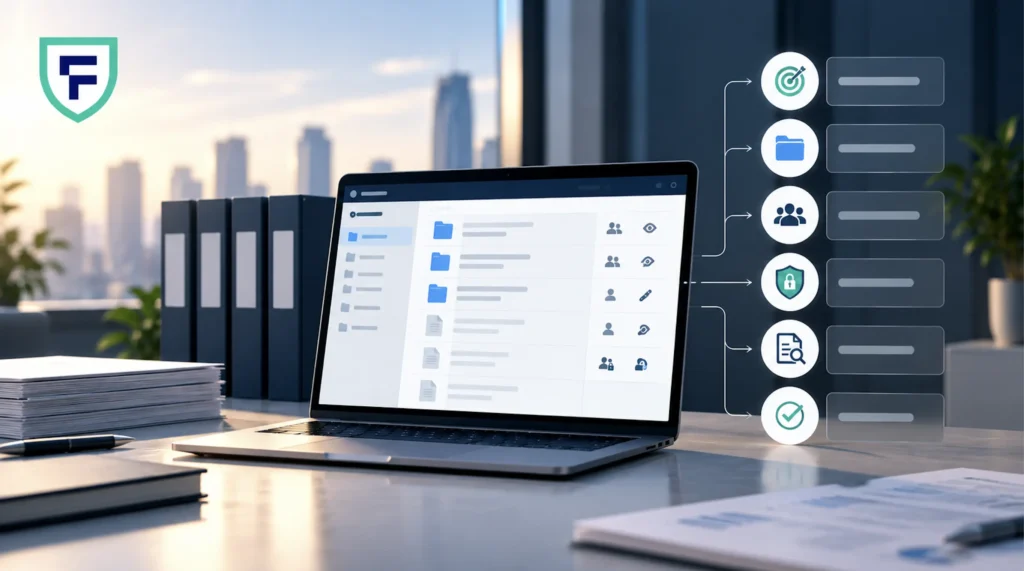
AES-256 encryption for data at rest and in transit is the industry standard. Beyond encryption, compliant VDRs implement role-based access controls that let administrators define precisely which users can view, download, edit, or share specific documents. Multi-factor authentication provides an additional layer of protection against credential-based attacks.
Businesses evaluating data protection capabilities can explore FirmsData’s virtual data room for granular permissions, document security, and audit tracking.
Automated Consent and Notification Workflows
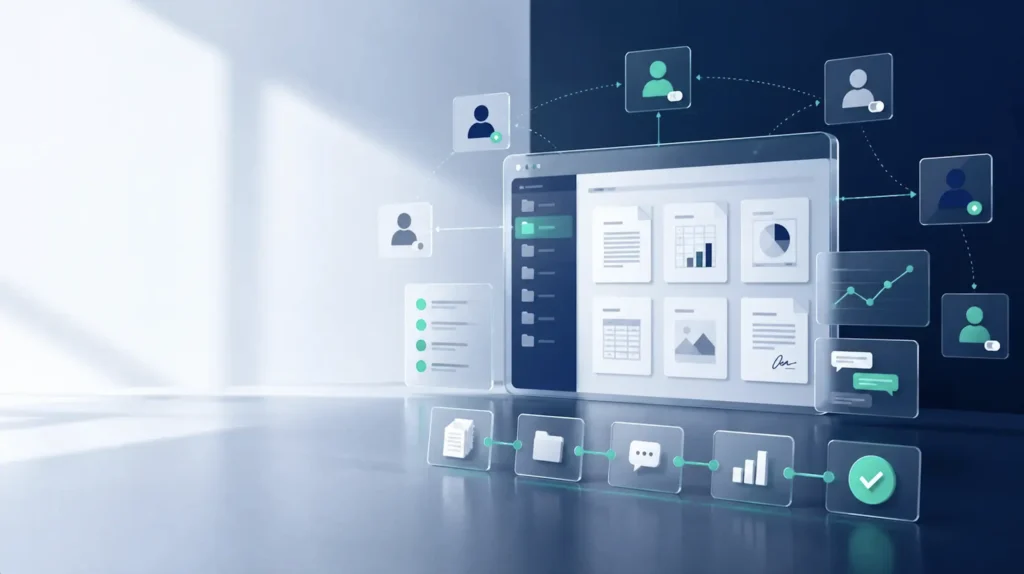
A compliance-ready VDR includes built-in consent capture at the point of data collection, immutable logging of all consent events, automated breach detection with real-time alerting, predefined notification workflows for regulators and affected individuals, and data subject request management with audit trail documentation.
Comprehensive Audit Trails
Every user action, from document uploads to downloads to shares to deletions, should be logged in real time with user identification, timestamps, IP addresses, and action details. These logs need to be exportable for audit purposes and retained for the period required by applicable regulations.
Sector-Specific Implications
Financial Services
Banks, NBFCs, and investment firms are subject to RBI data handling guidelines in addition to the DPDPA. A compliant VDR supports both by providing local data storage, exhaustive audit trails, and the granular access controls needed for regulator inspections. During M&A due diligence in financial services, the volume of personal data (customer records, employee information, KYC documents) is substantial, making compliant data handling especially critical.
Legal Practices
Law firms managing client files, litigation documents, and regulatory filings handle large amounts of personal data across multiple matters. A compliant VDR helps by providing controlled document access, automated retention and deletion policies, and streamlined data subject request fulfillment. Client confidentiality obligations amplify the importance of getting this right.
Healthcare and Pharmaceuticals
Clinical trial data, patient records, and drug development documentation all contain sensitive personal information. Compliance requires not just secure storage but also granular control over who can access specific data sets, automated retention management, and detailed audit capabilities for regulatory submissions.
IT Services and Outsourcing
IT companies frequently process data on behalf of clients across multiple jurisdictions. The DPDPA adds a layer of obligation for data that originates from or is processed within India. A VDR with Indian data residency and built-in compliance features lets IT firms balance localization requirements with the global access their clients need.
Implementation Roadmap
Moving to a DPDPA-compliant VDR is not a one-step process. A practical roadmap looks like this:
- Current state assessment: Map existing data flows, storage locations, and consent mechanisms. Identify gaps relative to DPDPA obligations.
- Platform selection: Evaluate VDR providers based on data residency options, compliance features, certifications, and pricing.
- Data migration: Transfer documents to compliant infrastructure using encrypted channels, preserving folder structures and permissions.
- Workflow activation: Enable automated consent capture, breach detection, notification workflows, and data subject request management.
- Ongoing monitoring: Use real-time dashboards to track compliance metrics, conduct periodic security assessments, and review policies as the regulatory landscape evolves.
Compliance is not a one-time project. It is an ongoing operational discipline. The right VDR platform makes that discipline manageable by automating the repetitive parts and providing the visibility needed to stay ahead of evolving requirements.
FirmsData is one of the few VDR providers with certified data centers in India (Mumbai and Hyderabad), built-in consent and breach notification workflows, SOC 1 and SOC 2 certifications, and transparent flat-rate pricing. For organizations that need DPDPA compliance without adding operational complexity, it is worth evaluating.