

Saudi Arabia’s Vision 2030 is reshaping the Kingdom’s economy. Privatization programs, international investment incentives, and sector diversification are driving a surge in M&A activity, joint ventures, and capital-raising transactions. Between 2022 and 2025, the Kingdom saw a sustained increase in cross-border deal flow, particularly in energy, financial services, healthcare, and technology.
But digital transformation brings digital risk. The same connectivity that enables global deal-making also expands the attack surface for cyber threats. And Saudi Arabia’s regulators have responded with a compliance framework that is among the most demanding in the region.
For organizations managing sensitive transactions, the question is no longer whether to use a virtual data room. It is how to choose one that satisfies both security needs and Saudi regulatory requirements.
Saudi Arabia’s Regulatory Framework
NCA Essential Cybersecurity Controls
The National Cybersecurity Authority (NCA) has published a comprehensive set of controls that apply to all government entities and private sector organizations managing critical infrastructure. The framework covers governance and risk management, asset management and classification, identity and access management, network security, application security, third-party and cloud security, cryptography, physical security, and incident management and business continuity.
For organizations using cloud-based platforms, the NCA’s cloud security requirements add another layer. Cloud services must meet specific standards around data protection, access controls, encryption, and audit capabilities. Any VDR used to manage government-related or critical-infrastructure documents must demonstrate alignment with these controls.
Personal Data Protection Law (PDPL)
The PDPL, which came into effect in stages starting in 2023, establishes requirements for personal data processing in Saudi Arabia. Key obligations include obtaining explicit consent before processing personal data, storing Saudi personal data within the Kingdom or in approved jurisdictions, honoring individual rights to access, correct, and delete personal data, reporting data breaches to the Saudi Data and Artificial Intelligence Authority (SDAIA) promptly, and implementing technical and organizational security measures proportionate to the risk.
These requirements directly impact VDR selection. If a VDR stores data outside the Kingdom without proper authorization, the organization using it may be in violation of the PDPL regardless of the security features the platform offers.
The Threat Landscape in Saudi Arabia
Saudi Arabia’s strategic importance in energy markets, combined with its rapid digitization, makes it a high-priority target for cyber attacks. The Kingdom has experienced significant ransomware campaigns targeting critical infrastructure, phishing attacks designed to compromise credentials of financial and government employees, supply chain attacks exploiting third-party vendor access, and advanced persistent threats (APTs) attributed to state-sponsored actors.
The energy sector is particularly vulnerable. Operational technology (OT) systems controlling oil and gas infrastructure have been targeted in several high-profile incidents. Financial services firms face increasing pressure from social engineering attacks. And healthcare organizations managing sensitive patient data are seeing escalating breach attempts.
General-purpose cloud storage platforms were not designed to withstand this threat environment. Virtual data rooms built for high-security applications provide the defense-in-depth architecture that Saudi organizations need.
How VDRs Address Saudi Business Needs
Document Security
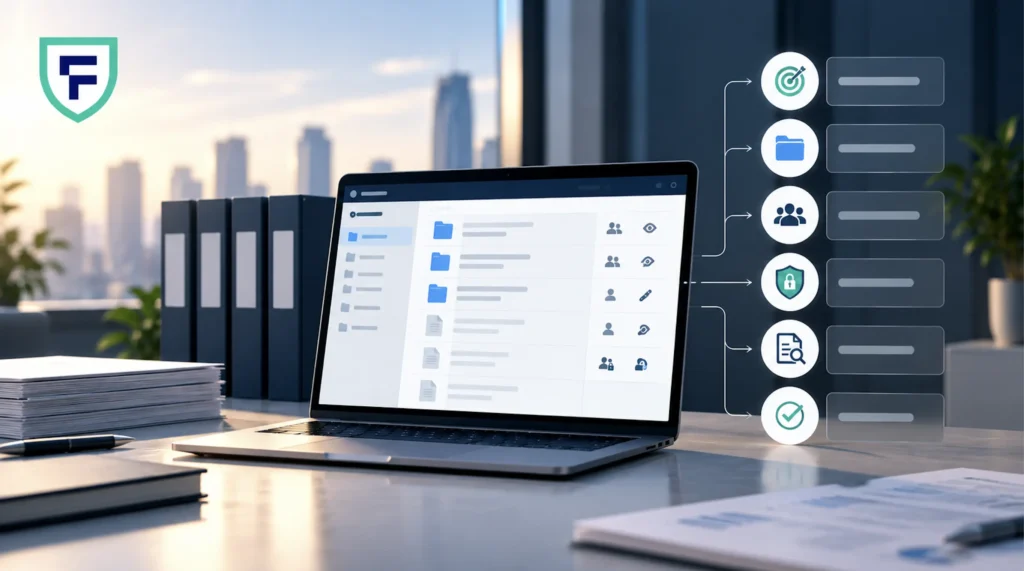
A properly configured VDR provides multiple layers of protection:
- AES-256 encryption for data at rest and in transit
- Multi-factor authentication with support for hardware security keys
- Granular access controls configurable per user, per document, per action
- IP and domain restrictions limiting access to approved networks
- Dynamic watermarking with user identification for traceability
- Print, download, and screenshot restrictions configurable by role
- Real-time activity monitoring with automated anomaly detection
Data Sovereignty
For PDPL compliance, VDR providers should offer data hosting options within Saudi Arabia or in jurisdictions approved by SDAIA. Some providers support deployment through local cloud infrastructure partners, keeping data physically within the Kingdom while maintaining the collaboration benefits of a cloud platform.
VDR platforms with regional data center options in the Middle East, such as those expanding coverage into the Gulf states, offer a practical path to compliance without sacrificing functionality.
Compliance Reporting
VDRs maintain comprehensive audit trails that document every user action, every document interaction, and every permission change. These trails satisfy both NCA audit requirements and PDPL accountability obligations. Administrators can generate compliance reports with filters by date range, user, document, or action type, simplifying both internal reviews and external audits.
Industry Applications in Saudi Arabia
M&A and Investment
The Vision 2030 privatization pipeline has generated substantial M&A activity across sectors. VDRs provide the secure infrastructure for managing due diligence documents, controlling access for multiple bidders, tracking engagement analytics, and producing the audit trails that Saudi regulators expect.
Energy
Saudi Arabia’s energy sector handles some of the most sensitive operational data in the world. VDRs protect geological surveys, exploration data, environmental assessments, and financial models while enabling secure collaboration between joint venture partners, contractors, and regulatory agencies.
Financial Services
Banks, investment firms, and insurance companies use VDRs for investor document management, loan syndication, regulatory reporting, and internal audit documentation. The detailed logging and access controls satisfy SAMA (Saudi Central Bank) oversight requirements.
Healthcare
Hospital groups, pharmaceutical companies, and medical device firms manage patient data, clinical trial documentation, and regulatory submissions through VDRs. The security controls and audit capabilities support compliance with both PDPL and healthcare-specific data protection standards.
Government and Public-Private Partnerships
Vision 2030 has created numerous public-private partnership opportunities. VDRs support the procurement process, inter-agency document sharing, and confidential negotiations with alignment to NCA cybersecurity controls.
Selecting a VDR for Saudi Operations
When evaluating VDR platforms for Saudi Arabia, organizations should assess:
- NCA alignment: Does the platform meet the Essential Cybersecurity Controls?
- PDPL compliance: Can data be hosted within the Kingdom or in approved jurisdictions?
- International certifications: Does the provider hold ISO 27001 and SOC 2?
- Arabic language support: Can the interface and documentation be delivered in Arabic?
- Deployment flexibility: Is on-premises or private cloud hosting available?
- Scalability: Can the platform handle the document volumes and user counts that large Saudi transactions require?
- Pricing transparency: Is the cost model predictable, with no hidden fees?
Virtual data rooms are no longer optional for businesses operating in Saudi Arabia’s regulatory and security environment. They are a strategic requirement for any organization that handles sensitive data, manages complex transactions, and needs to demonstrate compliance to Saudi regulators. The organizations that adopt secure, compliant platforms early will be better positioned to compete in the Vision 2030 economy.