

Due diligence is where deals are won or lost. The best strategic rationale in the world cannot compensate for a diligence process that misses hidden liabilities, burns through budget on inefficient workflows, or damages the buyer-seller relationship before the ink dries.
After working through hundreds of transactions, experienced deal teams tend to converge on the same framework: effective due diligence rests on three pillars. Accuracy ensures you find what matters. Efficiency ensures you find it in time. And relationship management ensures the process itself does not become an obstacle to closing.
Here is how each pillar works in practice and why all three need to operate together.
Pillar 1: Accuracy
M&A due diligence typically involves reviewing thousands of documents across financial, legal, operational, tax, environmental, and IT workstreams. The review happens under intense time pressure, often within a 4- to 8-week window. The risk of missing a critical detail is high, and the consequences can be catastrophic.
A missed change-of-control provision in a key customer contract can trigger contract termination after closing. An overlooked environmental remediation liability can cost millions. An undisclosed employment dispute can derail integration. Accuracy is not about being thorough for its own sake. It is about identifying the specific risks that affect valuation, deal structure, and post-close performance.
What Drives Accuracy
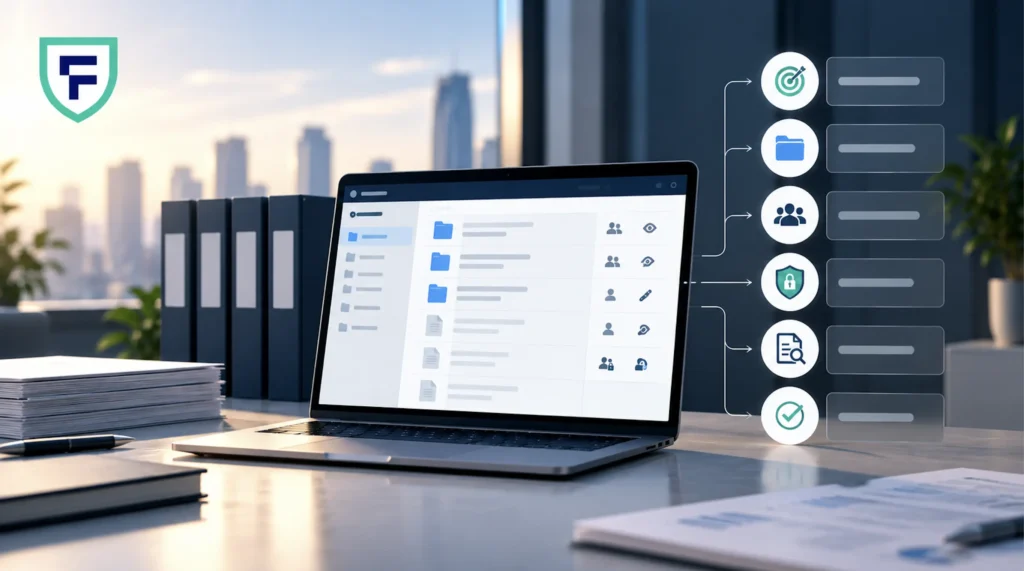
- Structured document organization: A logical folder hierarchy that mirrors due diligence workstreams (financial, legal, operational, tax, HR, IT, environmental) makes it possible for specialists to locate their materials without wading through unrelated documents.
- Standardized checklists: Comprehensive checklists for each workstream ensure consistent coverage. They prevent the common failure mode where a busy team focuses on familiar areas and glosses over less visible risk categories.
- AI-powered search: Natural language search across large document sets helps reviewers find relevant information by meaning, not just keywords. This is particularly valuable for identifying inconsistencies between documents or locating specific contract provisions across hundreds of agreements.
- Version control: When documents are revised during the diligence process, reviewers need to know which version is current and what changed. Without version control, teams waste time reviewing outdated documents or, worse, basing conclusions on superseded information.
- Complete audit trails: Detailed logs showing who reviewed what, when, and for how long provide assurance that the diligence process was thorough. These logs also support post-close dispute resolution if issues arise that were allegedly missed during review.
Pillar 2: Efficiency
Traditional due diligence is resource-intensive. Teams review documents page by page, search for the same information across multiple formats, coordinate with advisors scattered across time zones through email chains, and spend significant time managing logistics rather than analyzing substance.
This is not just expensive. It is slow. And in M&A, speed matters. A buyer that takes 12 weeks to complete diligence when a competitor can do it in 6 is at a structural disadvantage. Sellers lose patience with slow processes. Competing bidders gain time to strengthen their offers. And market conditions can change, potentially invalidating assumptions that underpinned the original thesis.
What Drives Efficiency
- Bulk upload and auto-organization: Populating the data room quickly, with folder structures preserved and documents automatically tagged, compresses the setup phase from days to hours.
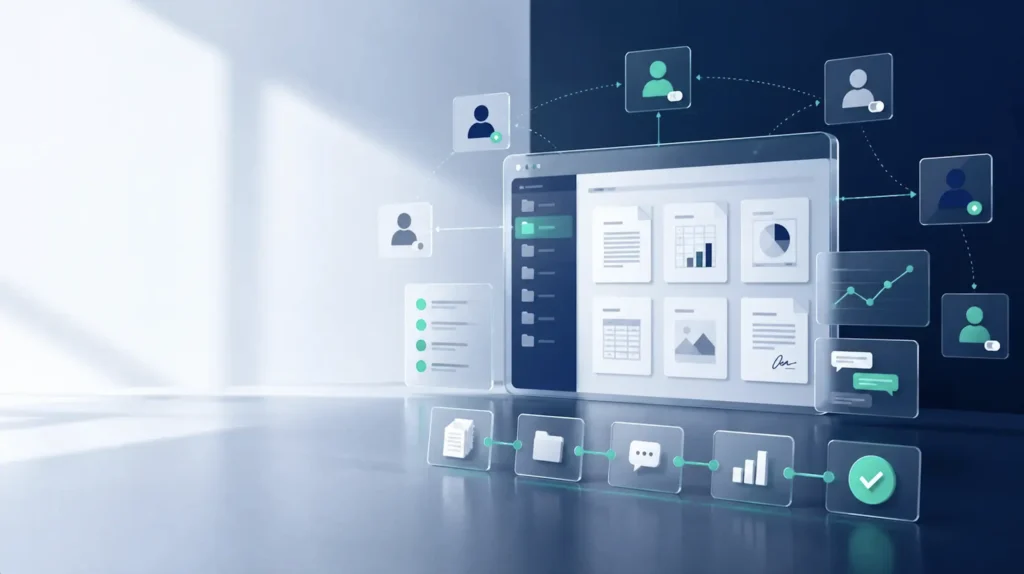
- Parallel access: Multiple review teams (financial, legal, operational) should be able to work simultaneously in different sections of the data room without waiting in queue. Serialized access is a bottleneck that adds weeks to timelines.
- Integrated Q&A: Questions submitted through the data room platform are documented, assigned, tracked, and time-stamped. This eliminates the confusion of email chains where questions get lost, responses go to the wrong people, and follow-ups fall through the cracks.
- Activity dashboards: Real-time visibility into who is reviewing what, where bottlenecks are forming, and which sections remain untouched helps project managers allocate resources and keep the process on schedule.
- AI-powered anomaly detection: Machine learning that flags unusual patterns in financial data, identifies missing documents, or highlights inconsistencies between related files reduces the manual effort required for first-pass review.
Pillar 3: Relationship Management
This pillar gets the least attention in textbooks but may have the most impact on deal outcomes. How the buyer conducts due diligence sends a powerful signal to the seller about the kind of partner they will be after closing.
A disorganized process with duplicate data requests, slow communication, and unclear points of contact tells the seller that the buyer is not operationally ready. It erodes trust at precisely the moment when trust is most needed to navigate the complexities of negotiation and closing.
A smooth, professional process builds confidence. It demonstrates respect for the seller’s time and resources. It shows that the buyer has done this before and can execute reliably. And it positions the buyer favorably when negotiations get difficult, because the seller has confidence that the buyer will follow through on commitments.
What Drives Good Relationship Management
- Professional presentation: A clean, organized data room that is easy for the seller’s team to navigate creates a strong first impression. If the buyer’s data room looks professional, the seller infers that the buyer’s operations are professional too.
- Consolidated requests: Submitting one comprehensive data request list, rather than sending piecemeal requests over weeks, demonstrates planning and reduces the burden on the seller’s team.
- Responsive communication: When the seller provides documents or answers questions, acknowledging receipt and following up promptly shows respect and keeps the process moving.
- Transparent Q&A: All communications should be documented in a single platform. This prevents misunderstandings, reduces duplicate questions, and gives both parties a shared record of what was discussed and agreed.
Common Mistakes That Undermine Diligence
Optimism bias: Overestimating revenue synergies while underestimating integration costs is the most common valuation error. Guard against it by requiring evidence-based justification for every synergy assumption and applying conservative discount rates to projections that depend on successful integration.
Legal blind spots: Financial diligence receives the most attention, but legal issues often cause the biggest post-close headaches. Undisclosed litigation, IP ownership disputes, non-compete violations, and change-of-control provisions in key contracts deserve systematic attention.
Operational gaps: Key person dependencies, outdated technology systems, supply chain concentration, and deferred maintenance are operational risks that rarely appear on financial statements but can significantly impact post-close performance.
Cultural misalignment: Differences in decision-making style, communication norms, risk tolerance, and performance management can undermine integration even when the financial and strategic logic is sound. Cultural assessment should be part of operational diligence, not an afterthought.
Technology as an Enabler
All three pillars benefit from the right technology infrastructure. A virtual data room provides the centralized, secure, auditable environment that accuracy requires. Built-in workflow tools deliver the parallel processing and integrated communication that efficiency demands. And a professional, intuitive interface supports the relationship quality that smooth transactions depend on.
Platforms like FirmsData combine VDR functionality with deal management and document management in a single environment. Unlimited storage, AI-powered search, integrated Q&A, activity analytics, and 24/7 support address all three pillars without requiring separate tools or additional integrations.
The deal teams that invest in getting all three pillars right, not just one or two, produce better outcomes: more accurate valuations, faster timelines, stronger seller relationships, and smoother post-close integrations.